There is a particular pleasure in discovering a watch brand before it becomes a familiar name. Not necessarily because the watch is cheaper, rarer, or destined to become collectible, but because you have stumbled across something that feels a little different. A design that makes you look twice. A small workshop doing things its own way. Or a watchmaker whose ambitions seem to have very little to do with chasing the latest industry trend.
British watchmaking is an interesting place to look for these discoveries. Beyond the familiar names and the established luxury houses, there is a diverse collection of independent businesses working across everything from everyday tool watches to experimental design and traditional craftsmanship.
The term microbrand is used rather loosely in watch collecting. Some businesses design watches around movements and components manufactured elsewhere; others assemble their watches locally, machine their own cases, or pursue more specialised forms of watchmaking. They are not all doing the same thing, and nor should they be expected to.
That variety is precisely what makes the independent scene interesting.
For this feature, we have looked beyond the names that tend to dominate the usual British watch roundups. These are twenty independent brands worth discovering, each for a different reason. Some have established collections, while others remain small operations with a more limited presence. The common thread is a distinctive story worth exploring.
1. Golby Watches — An independent worth investigating
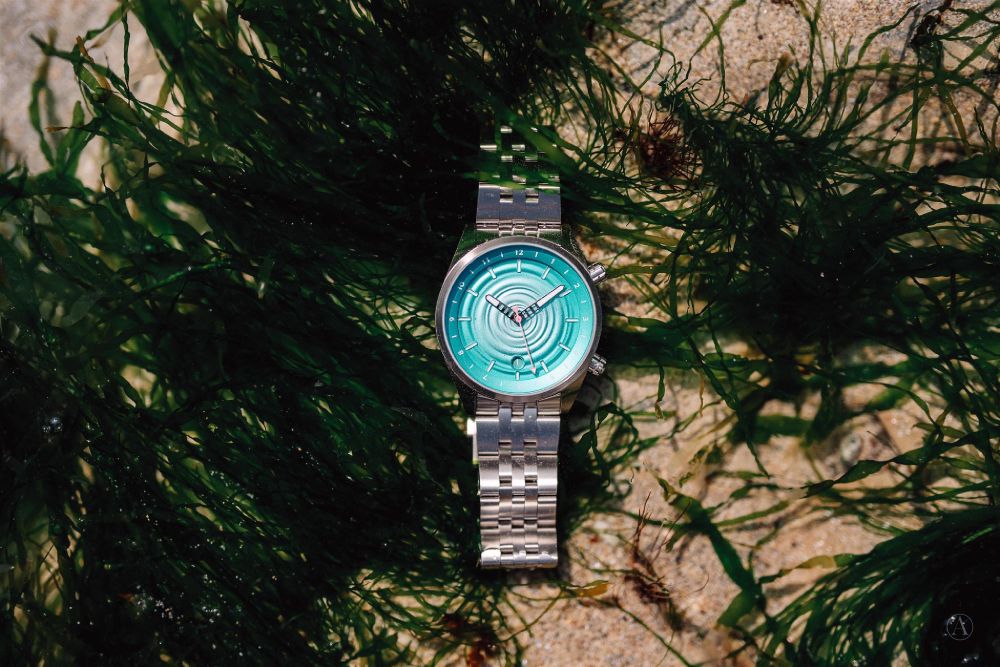
Golby watches are a small British independent who’s inspiration comes from the Cornish coast. Throughout their lineup Golby feature textured oil-pressed dials inspired by the sea.
Starting with their Aquareef 40 models, which are a more traditional dive watch layout with a 120-click sapphire crystal dive bezel, we see a waved dial with playful colour combinations, combined with the true practicality of 200m of water resistance and an on-the-fly adjustable bracelet.
The latest Skipping Stone lineup takes that ocean inspired oil-pressed dial to the extreme with a striking 3d radial splash pattern. The colour-matched date window and the omission of dial branding maintain the watch’s clean, calm aesthetic.
Golby’s signature complication seen on their Aquareef 40 and Skipping Stone models is a dual-timer rotating internal chapter ring, operated by the crown at 2 o’clock, allowing for subtle tracking of a second timezone.
Golby uses the Miyota 9015 automatic movement, a proven Japanese calibre celebrated for its slim profile, reliability, and accuracy. With a 42-hour power reserve, 24 jewels, 28,800 bph, and hacking functionality, it’s a movement built for those who value both performance and refinement.
What makes Golby unique is their combination of playful designs with function. Their signature complication adds a level of refined functionality without overcomplicating the designs of the watches.
2. Alpharo — When the hands change the whole idea
Most watches rely on a familiar visual language. Two hands, a dial, a set of markers and a case shape that has been refined over generations. Alpharo is worth investigating because it challenges some of those conventions.
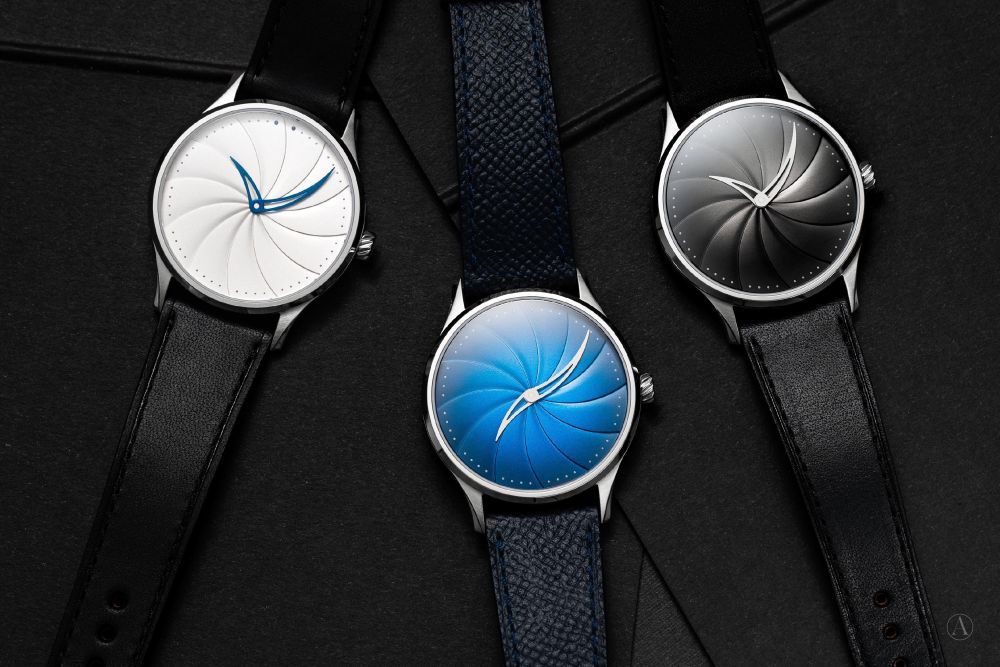
For the design of the Model 1, their inaugural timepiece, Alpharo took inspiration from non-Euclidean geometry, where space bends and curves beyond classical rules. Curved skeleton hands hover over a stamped three dimentional spiral dial, each curve echoing the dial below in a form that feels organic.
The three colour variants are Maelstrom Blue: A translucent lacquer dial with a fumé gradient. Cyclone White: A bead-blasted silver dial that transitions from crisp white to metallic silver, revealing a subtle sparkle under direct sunlight. Galaxy Black: A charcoal sunburst dial with a fumé gradient. The radiating finish plays with light across the dial’s contoured surface.
On the caseback, a debossed Poincaré disk pays tribute to the 19th-century breakthrough that reshaped our understanding of geometry and, ultimately, of space-time itself.
The brand’s unconventional hand design provides a way into a broader question: do curves reflect the passage of time better than straight edges.
It is a question that design-led independents are particularly well placed to explore. Without the weight of a long-established product family, they can experiment with the relationship between the hands, the dial and the person reading it.
3. Oriorwaith J. Sarnowski — A Welsh watchmaking story
The British watch scene is not confined to London or the traditional centres of English industry. Scotland, Wales and the regions of England all have their own stories to tell. Oriorwaith J. Sarnowski is a candidate for exploring the Welsh end of that landscape, with a watchmaking identity that sits outside the better-known names.
Oriorwaith J. Sarnowski launched in January 2024 with the release of their first timepiece, the Y Derwydd, in March 2024 on Kickstarter.
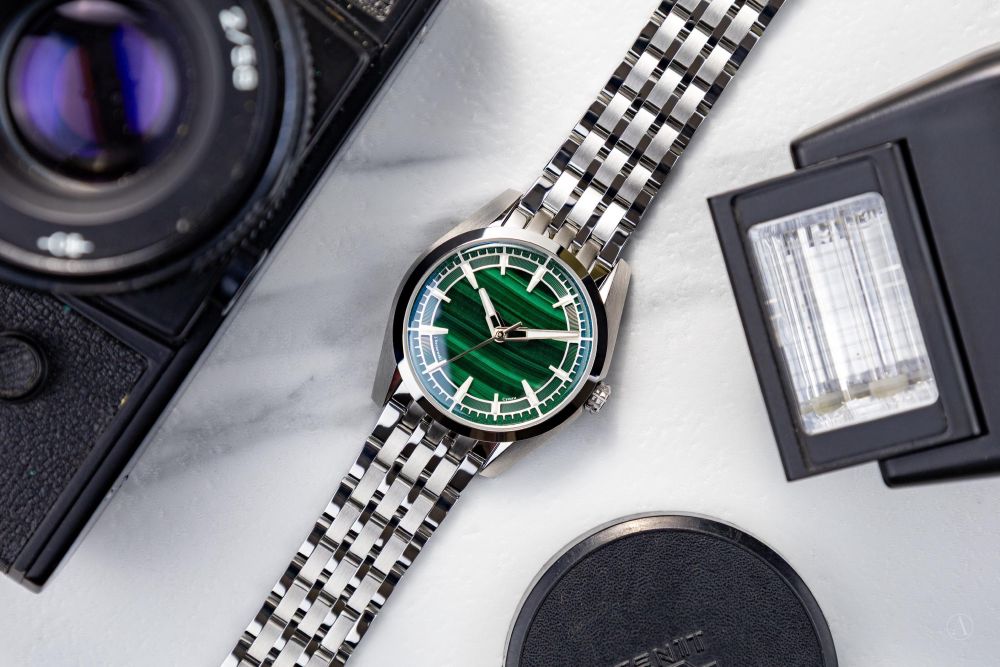
One of the key pieces of design language of Oriorwaith J. Sarnowski are their stone dials, which took much development to perfect. Oriorwaith J. Sarnowski found that pure stone dials were prone to cracking so the natural stone backed with a thin layer of metal that has a slightly larger diameter to press against the case and absorb small impacts before they reach the stone.
Movements vary between models, with some being pocket watch derived but the Y Sgowt model uses a Miyota series 9. However do not mistake this for an off-the-shelf factory component. The bridges have been completely re-manufactured with a sunray stripe and a Welsh Dragon proudly engraved on the balance cock. The rotor takes design from an ancient Roman horse bridle mount unearthed near the workshop of Oriorwaith J. Sarnowski.
All Oriorwaith J. Sarnowski watches are assembled and adjusted by the founder personally in a batch approach with some Malachite Sgowts still being avaliable at the time of writing, I am personally very tempted to pick one up.
4. DAWSEY Watches — Manufacturing from the ground up
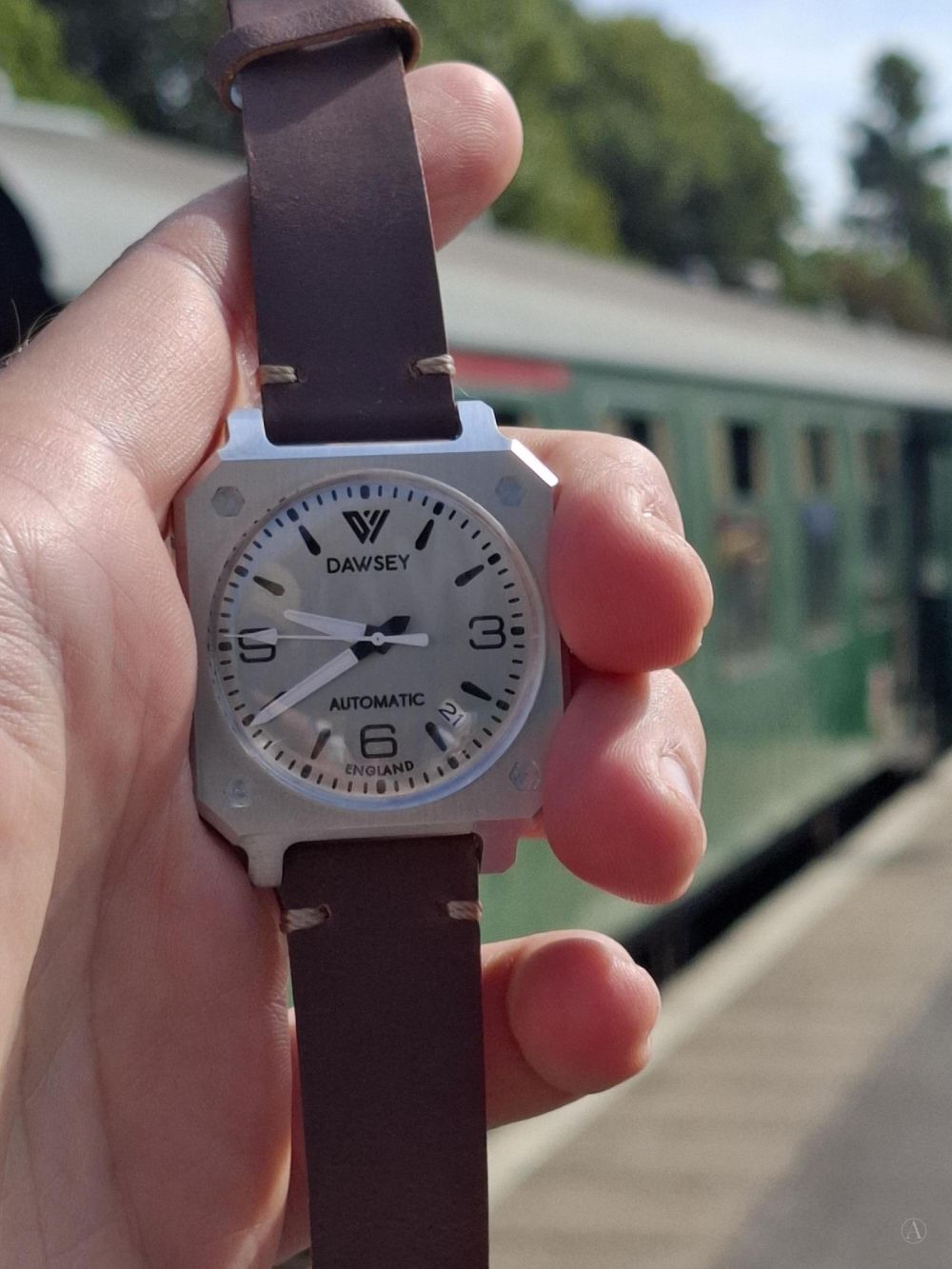
Smaller ateliers can be particularly interesting because their work may be closely connected to the person making it. That can influence the choice of materials, the finishing, the scale of production and the relationship between the maker and the customer. DAWSEY is one of the more compelling names to investigate if you are interested in this close relationship.
Based near Marlborough in Wiltshire, founder Sam draws on a background in engineering, including experience in aerospace and motorsport. Dawsey Watches are manufactured in their own workshop, including machining and finishing cases and dials, before assembling and testing the completed watches.
This is a different proposition from a brand whose principal contribution is design and assembly. DAWSEY’s approach places the manufacturing process itself at the centre of the story.
Their watches are handmade to order, and the company currently directs prospective customers towards a waiting list. That means availability is part of the buying decision, rather than an afterthought.
For anyone interested in the relationship between engineering, craftsmanship and the finished object, DAWSEY deserves a closer look.
5. MHD Watches — For the motorsport-minded
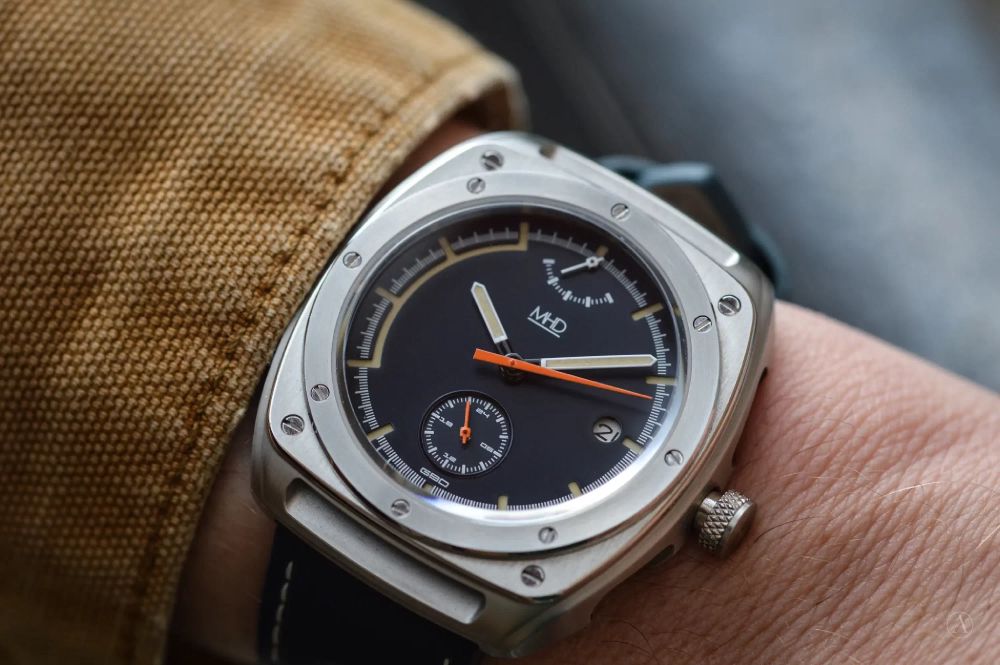
Cars and watches have shared a design vocabulary for decades. Tachymeter scales, contrasting registers, brushed metal, dashboard instruments and the visual language of racing all migrate naturally from one world to the other.
MHD Watches explores this connection through automotive-inspired designs and limited-edition models.
The appeal is not simply that the watches reference cars. It is that motoring offers a rich source of visual ideas: the typography of an instrument cluster, the proportions of a steering wheel, the restrained use of colour in a competition car or the functional logic of a cockpit.
For readers whose interest in analogue objects extends beyond watches, MHD is worth investigating.
6. KOMPAS Watches — A different way to read the dial
Image not found: removed.webp
A dial can be beautiful without being complicated, but it can also be interesting because of the way it organises information.
During the First World War the Royal Flying Corps (RFC) introduced sector clocks in 1917 to aid in the chronological monitoring and position plotting of German aircraft. The system worked by dividing the clock face up with coloured triangles, each segment being five minuites. Enemy aircraft position was reported to sector headquarters along with the colour of the triangle beneath the minute hand at the time of sighting, where counters of the relayed colour were used to represent each air raid on a large table with a map of the UK.
This system allowed fighter controllers to see where each formation was heading and the age of the information was aparent from the colour of the counter. It was a basic but effective system which allowed for quick decisions during pressured situations.
Kompas watches base their design from this very sector clock, however consolidating the multiple colours into colour themes dependant on the variant, North, East, South and West.
Instead of simply reproducing a familiar military or field watch, the distinctive dial layout is represents something nuanced and interesting in British history. It’s a timepeice that may very well spark conversations and the sharing knowlege.
7. Apiar — Exploring new manufacturing methods
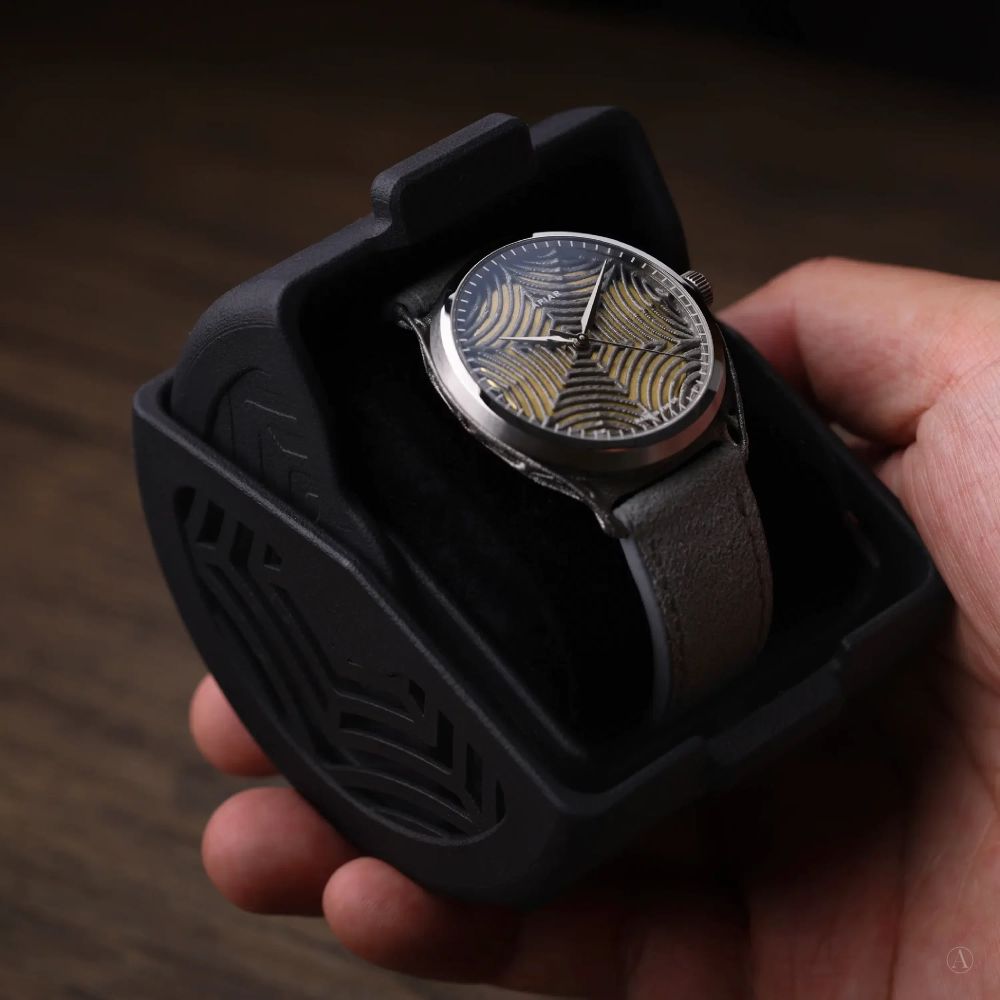
Watchmaking is often associated with traditional materials and familiar manufacturing processes. Yet the case, dial and bracelet are also opportunities for experimentation.
Apiar is worth investigating for its reported interest in additive manufacturing and titanium. Those technologies raise interesting questions about the relationship between design freedom, material properties and the practical realities of producing a wearable object.
A manufacturing technique is not inherently better simply because it is newer. What matters is what it enables: a different form, a useful reduction in weight, a more complex geometry or a component that would be difficult to produce conventionally.
Apiar could make a valuable addition to this feature if its current product range and manufacturing claims support that story. It is an area where the evidence should lead the narrative, rather than the other way around.
8. Pompeak — A smaller independent from Bristol
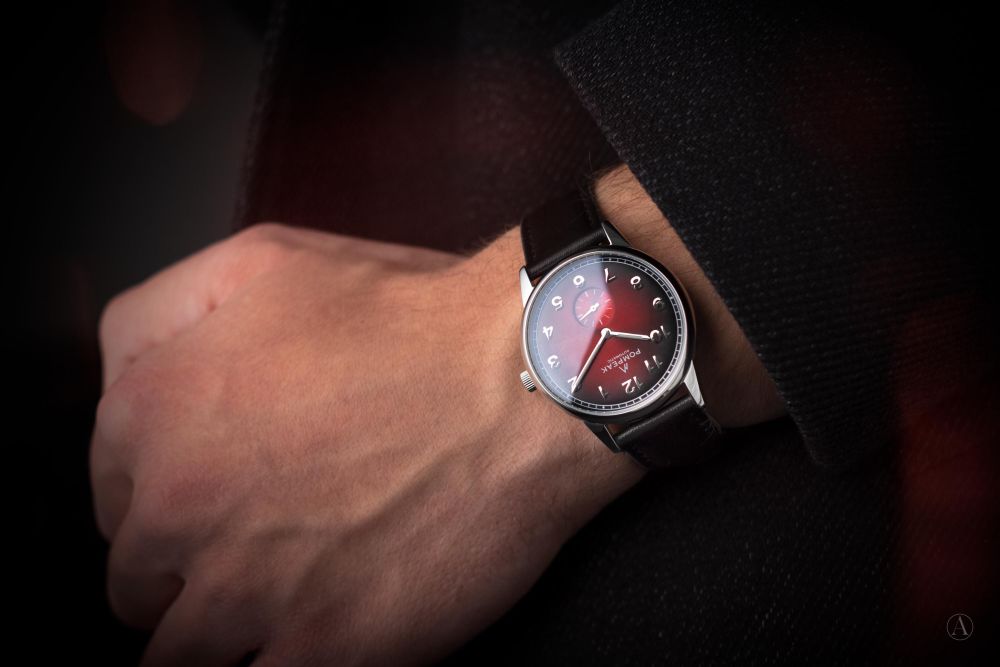
Bristol has a place in Britain’s wider watchmaking story, and Pompeak adds another name to investigate within that regional landscape.
The challenge for any independent brand is to create a product that feels coherent. A recognisable design, a clear intended audience and a reason for the watch to exist beyond the fact that it is another new release all matter.
With some colourways of the Mallory being produced in a initial run of just 14 peices; you can be sure that
9. McQuaide Watches — Damascus Steel
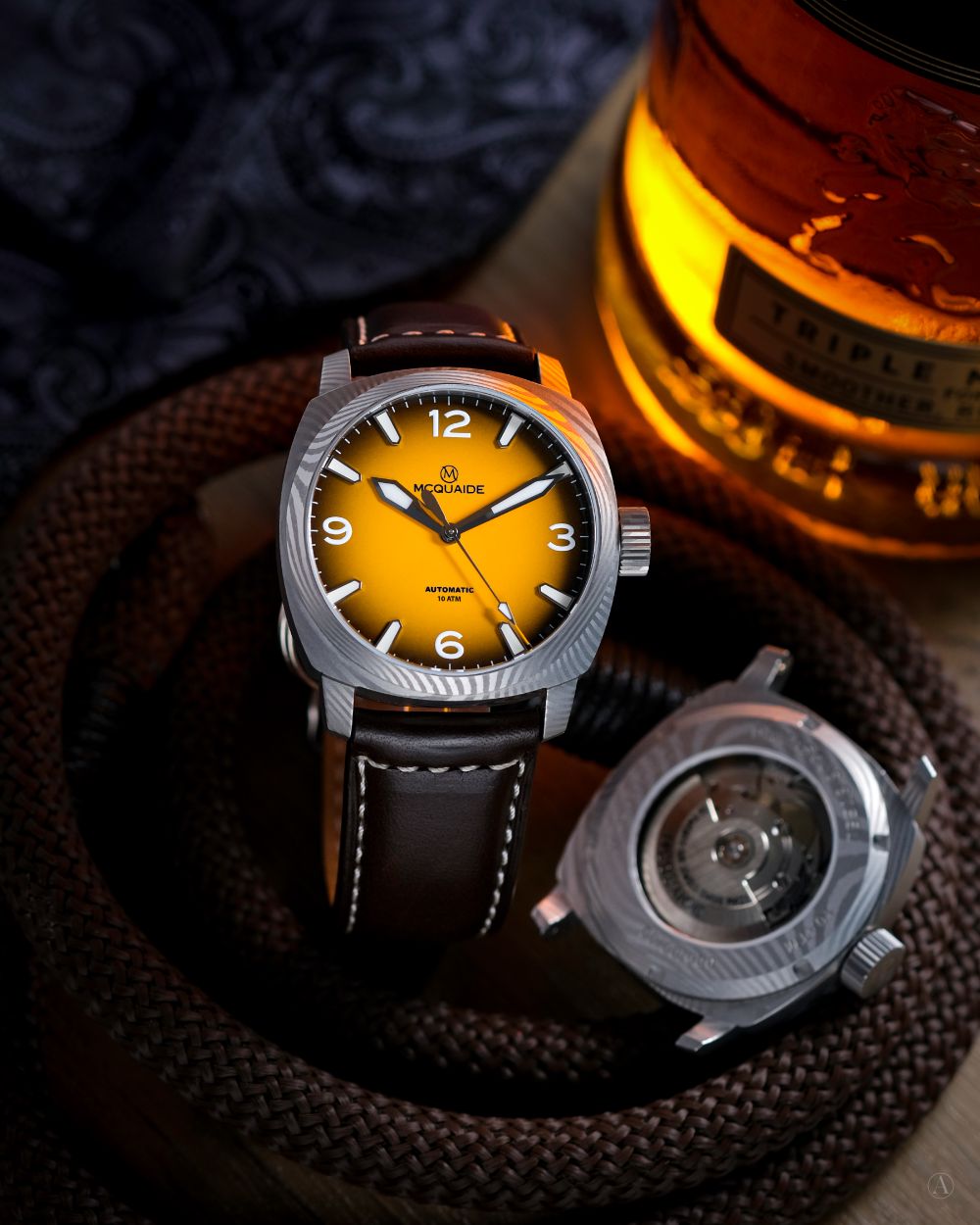
McQuaide Watches are a UK based brand who are dedicated to the use of Damascus Steel throughout their entire model range.
Damascus steel is a type of steel now known for its distinctive wavy patterns but what is little known is its historic past in swords and blades as far back as 500 AD.
Damascus steel is produced by repeatedly forging and folding multiple layers of different types of steel typically resulting in a metal that combines high-carbon steel for sharpness with lower-carbon steel for flexibility.
McQuaide says its Damascus steel is made from 316L and 304L stainless steels. These are forge-welded together, then etched to reveal the contrasting pattern. That’s modern pattern-welded Damascus steel,
Previously we discussed the use of gemstone dials and how each watch has a unique pattern. Damascus Steel offers the same proposition in case form.
Make no mistake, McQuaide are no one tricky pony. The watches are feature rich with the Q1-B dive watch range holding a class leading 1000m of water resistance.
Conclusion: The pleasure of finding something different
The appeal of independent watchmaking is not that every small brand is secretly producing the next great collectible. Most watches will not become rare investments, and obscurity is not a substitute for quality.
The appeal is the variety of ideas that emerge when businesses work at a smaller scale. One maker might be fascinated by a material. Another might want to bring more of the manufacturing process into its own workshop. Another might be interested in the way a dial communicates information, or in making a watch that reflects a particular landscape or personal passion.
That variety is worth celebrating in its own right.
For The Analogue Collective, these brands also represent an opportunity to look beyond the product photographs and specification sheets. The next step is to meet the people behind them, handle their watches and discover which ideas translate into genuinely compelling objects.
Some of the most interesting stories may be the ones we have not yet had the opportunity to tell.
Which independent British watch brands have we overlooked? We would love to hear your recommendations.
Further reading
- Alliance of British Watch and Clock Makers — The Makers
- Firle Watches — Our Story
- DAWSEY Watches — Official Website
| Photography: | Images to be sourced from the respective brands with permission, or captured by The Analogue Collective. |
| Ethics: | This is an independent, research-led editorial feature. The watches have not been physically tested for this article. Brand descriptions and production claims should be verified against official sources before publication. No brand affiliation or sponsorship unless otherwise disclosed. |
